Take control of your dreams — limited only by your imagination.
SCROLL ↓
What are lucid dreams?
Lucid dreaming is simply realizing that you are dreaming, while you are dreaming. You are sleeping peacefully, but suddenly the light turns on in your head: "Wait a second... I'm standing on the Moon in my underwear. This is a dream!"
As soon as that realization sets in, you change from a passive observer into the director. Your brain is awake, you have your normal memory and free will, except the laws of gravity and physics no longer apply.
Think of it as the ultimate, free Virtual Reality headset — no wires, no lag, and 100% crystal-clear senses. Want to fly like a superhero, drive an imaginary sports car, travel to unknown worlds, invent new things, experience sensuality and intimacy in total freedom, or (for true pros) meditate deeply within your own subconscious? You are in control.
If you'd like to hear from others about how they began this challenging yet rewarding journey, check out some of the videos from my list.
When is the chance of lucid dreaming highest?
To understand how to lucid dream, it helps to look at your sleep cycles. A night consists of cycles of about 90 minutes alternating between NREM sleep (deep physical recovery sleep) and REM sleep (the dream phase).
HOURS 1 - 4 Deep Recovery Sleep
During the first hours of the night, your physical body recovers in deep NREM sleep (Stages 3 & 4). REM dream phases are very short in this first part (5 to 10 minutes), making the chance of lucid dreaming low here.
HOURS 5 - 8 The Golden Window
Toward the end of the night, physical recovery is complete. REM dream phases become much longer and more intense (30 to 60 minutes in a row). This is the phase with the highest chance of lucid dreaming 🎯: your brain is more active, your memories are ready, and this is the ideal moment to wake up in your dream.
The Official 8-Step Guide
Step by Step to Your Lucid Dream Life
When you first read about lucid dreaming, it can seem overwhelming. This guide forms one interconnected chain reaction. Click any step to open it or navigate smoothly using the buttons below.
1
INTENTION
Set Your Goal & Direction
In dream science, 'intention' is the foundational keyword. Without a sharp intention, your attention fades. Determine in advance what you want to experience once you take conscious control.
More details↓
Why intention is your most powerful tool
In scientific research into lucid dreaming (pioneered by Dr. Stephen LaBerge), intention forms the foundation. It activates your prospective memory: the ability to plan now to realize later — in the middle of a dream — that you are dreaming and instantly know what you want to do.
Four inspiring ways to direct your intention:
Boundless freedom & adventure: Fly weightlessly over mountain ranges, voyage to distant galaxies, or create vibrant worlds from scratch.
Direct creative inspiration: Retrieve melodies, artwork, writing ideas, or innovative designs directly from your deepest subconscious imagination.
Nightly simulation & rehearsal: Rehearse an important speech, athletic skill, or high-stakes conversation in a hyper-realistic environment without consequences.
Personal growth & insight: Confront recurring nightmares, release deep stress, or engage in meaningful dialogues with dream characters as reflections of yourself.
💡 Pro Tip: Make your intention as concrete as possible (e.g., "As soon as I realize I am dreaming, I look at my hands and fly upward"). Specificity activates instant recognition.
2
RECALL
Dream Journal & Morning Rehearsal
Without memory, you might be lucid every night without ever knowing it. Enhance your dream recall with morning rehearsal and record everything immediately.
More details↓
Boost your dream recall and anchor your dreams
Everyone dreams several times each night. However, dream memories are biologically fragile: stored in fleeting short-term memory that vanishes upon distraction or movement. Without active dream recall, 90% disappears within five minutes of waking.
1. The statue principle upon waking: Stay motionless in the exact posture you woke up in with your eyes closed. Do not move; physical muscle activity overwrites the neural dream memory trace.
2. Crucial morning mental rehearsal: Before moving or getting up, rehearse the dream in your mind two to three times from start to finish. This consciously transfers the imagery from working memory into durable long-term storage.
3. Capture key anchors first: Mentally register a handful of specific keywords (e.g., "beach, vintage bicycle, purple sky"). Anchor words naturally pull the rest of the dream narrative along.
4. Record immediately in your dream journal: Reach for your bedside journal and write in the present tense ("I am walking through a forest..."). Give each dream a date and a short, evocative title.
💡 Pro Tip: Remember nothing on a given morning? Lie still for one minute anyway and write down your mood or sensations upon waking. Simply signaling to your brain that dreams are important dramatically multiplies recall within two weeks!
3
REALITY CHECKS
Daily Awareness & Sensory Triggers
Train your prospective memory by pairing noticeable everyday occurrences — such as a dog barking — directly with a critical check of your waking reality.
Meer details↓
Question your state of consciousness and break the illusion
In dreams, your brain uncritically accepts the most absurd situations as reality. With a reality check, you actively challenge that illusion: "Am I awake right now, or am I asleep in bed dreaming?"
How your memory works: Train your 'prospective memory'
Random testing quickly gets forgotten. Instead, train your prospective memory: the cognitive ability to remember to execute a planned action when a future cue appears. By attaching a reality test to a recurring sensory trigger, you condition your brain. Since these same triggers appear in your dreams, your mind will fire the reflex automatically during sleep!
Link checks to noticeable sensory cues (examples):
A sudden sound (e.g., a dog barking): Hear a loud bark, siren, or horn? Pause for 5 seconds and perform a reality check. Dogs and unexpected sounds occur all the time in dreams!
A visual standout: Spot a bright red car, curious billboard, or look into a mirror? Let that be your visual alarm.
Physical thresholds: Walking through doorways, boarding public transport, or stepping onto stairs.
Digital or social cues: When your phone vibrates with an alert, or when someone unexpectedly calls your name.
Emotional spikes: Sudden surprise, mild frustration, or spontaneous laughter? Ask yourself: "Does this situation truly make sense?"
The 5 most reliable practical reality checks:
1. The Nose Pinch (The absolute gold standard): Pinch both nostrils tightly shut, keep your mouth closed, and breathe in gently. In a dream, air flows through completely unobstructed because your physical body in bed keeps breathing!
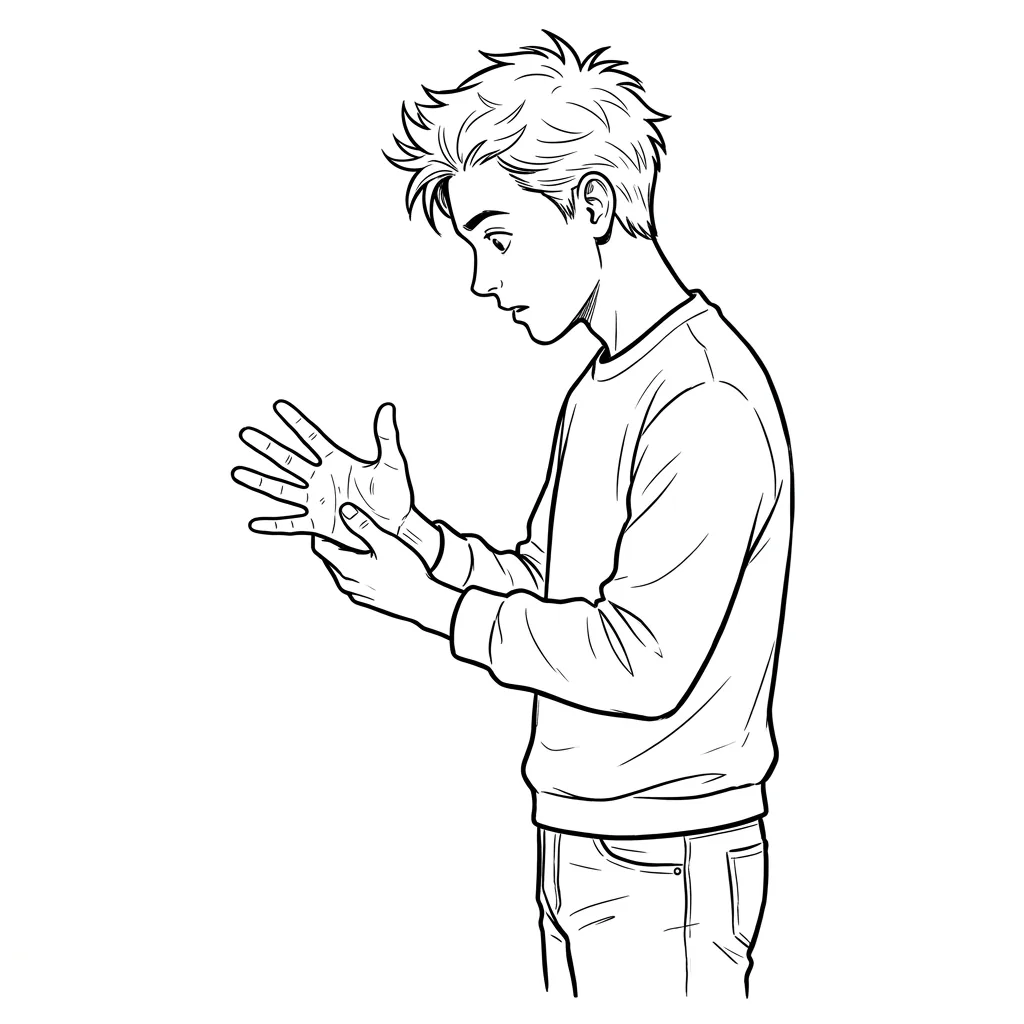
2. Finger through palm: Press your index finger firmly against the center of your opposite palm, genuinely expecting it to pass through. In a dream, it often slips right through.
3. Double reading check: Read a line of text or look at the clock. Look away for two seconds and look back. In dreams, letters and numbers cannot render stably: they scramble, morph, or change completely.
4. Inspect hands & count fingers: Hold your hands in front of your eyes and count your fingers slowly. In dreams, hands often appear wavy, blurred, or have four or six fingers.
5. Light switches & gravity hop: Flip a light switch (lighting usually fails to change in dreams) or do a gentle hop with the conscious expectation of floating.
💡 Pro Tip: Pick a maximum of 2 concrete triggers for today (e.g., "every time a dog barks" and "every time I walk through an outside door"). Specificity builds an unbreakable reflex.
4
DREAM SIGNS
Dream Analysis & Personal Clues
After logging your dreams, actively analyze them to uncover your dream signs. These are the recurring patterns and anomalies that expose your subconscious world.
More details↓
Dream analysis: What are dream signs and why are they gold?
Logging dreams in a journal (Step 2) is the foundation, but true breakthroughs occur when you analyze them like a detective. By reviewing your journal weekly, you discover dreams are not random: your subconscious has distinct habits, recurring settings, and anomalies. In dream science, these are called dream signs.
What exactly is a dream sign?
A dream sign is any recurring element, person, object, action, or context in your dreams that differs from the waking world, or appears with suspicious frequency. It can be completely impossible (flying, purple clouds, talking animals) or mundane yet oddly repetitive (your old school, malfunctioning phones, elevators, or water).
The 4 categories of dream signs (LaBerge classification):
1. Inner state (Consciousness): Bizarre emotions, sudden panic or euphoria without reason, or illogical convictions.
2. Impossible actions: Defying physics: floating, walking through walls, breathing underwater, or sluggish movements.
3. Form & appearance: Morphed objects: a car without a steering wheel, changing animals, or deceased loved ones appearing alive.
4. Context & environment: Unexpected places (an old classroom, a strange castle) or ordinary objects in absurd locations.
Why dream signs are so powerful for lucidity:
Your personal alarm bell in the night: When you train on your dream signs during the day, your brain sounds an alarm the moment that symbol appears in a dream: "Wait, my old school... that's my dream sign! I am dreaming!"
Direct trigger for reality checks: Pair a daytime nose pinch to situations that resemble your dream signs.
Fuel for dream induction: In Steps 5 and 6, use your top dream signs as your visualization anchor before falling asleep.
💡 Pro Tip: Use a highlighter in your dream journal for elements that appear at least twice. Choose one target of the week and tell yourself: "The next time I encounter this, I do a reality test immediately!"
5
SLEEP HYGIENE
Rest, Rhythm & Optimal REM Sleep
Without healthy sleep, you lack long REM cycles. Maintain a cool bedroom, avoid screens, and build a consistent routine for maximum dream clarity.
More details↓
Why sleep hygiene is the biological key to vivid dreams
Lucid dreams occur primarily during REM sleep, which grows longer and richer in the second half of the night. If poor evening habits disrupt your cycles, those crucial REM periods get fragmented or suppressed. Optimal sleep hygiene is an essential biological foundation.
The 6 golden rules for optimal sleep hygiene:
Apply these biological principles to soothe your nervous system and maximize REM sleep quality:
1. Strictly avoid screens and smartphones (at least 45-60 min prior): Blue light directly suppresses melatonin (your sleep hormone). Feeds, notifications, and videos keep your brain in an alert state. Keep screens out of the bedroom or place your phone out of reach on 'do not disturb'.
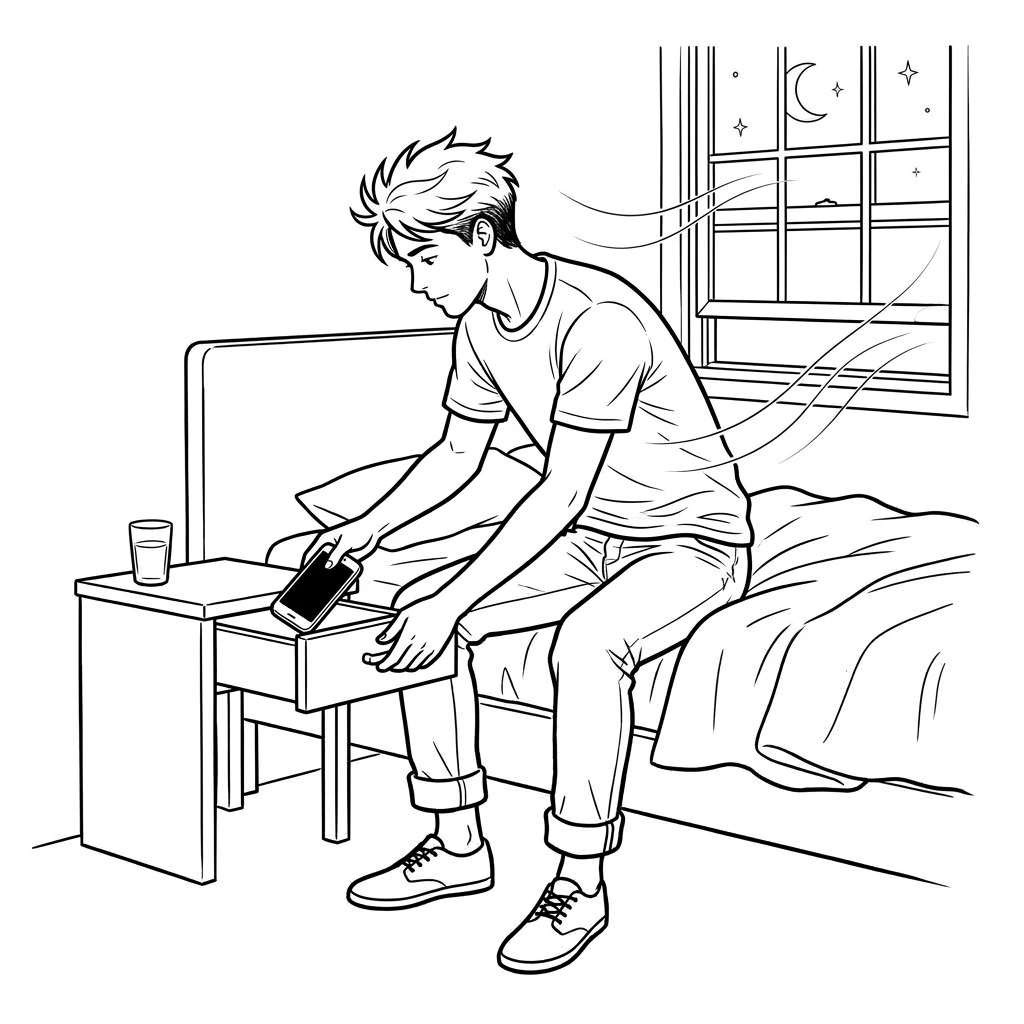
2. A cool, well-ventilated bedroom (16-18 °C / 60-65 °F): For deep sleep and healthy dream cycles, core body temperature must drop by roughly 1 °C. A hot, stuffy room disrupts thermoregulation and causes restless sleep. Crack open a window for fresh, cool air.
3. Avoid alcohol or sedatives: Alcohol suppresses REM sleep. While it makes you fall asleep quicker, it fragments your dream architecture; dreams become foggy and nighttime lucidity becomes virtually impossible.
4. Consistent schedule & recognizable routine: Go to bed and wake up around the same times daily (even on weekends). A regular circadian rhythm makes late-night REM phases deeply predictable, robust, and extended.
5. No heavy meals close to bedtime: Eat nothing heavy 2 to 3 hours before sleep. Active digestion elevates body temperature and triggers restless sleep.
6. Avoid intense late-night workouts: Heavy weightlifting or vigorous cardio spikes adrenaline and cortisol. Exercise earlier in the day; choose gentle stretching, light yoga, or a calm stroll in the evening.
💡 Pro Tip: Treat the last 30 minutes before bed as a quiet sanctuary. Dim the lights, practice gentle relaxation, or read a book in a cool room. A calm nervous system is the ideal launchpad for the night!
6
INDUCTION
WBTB, MILD, WILD, DILD & Countdown
Time to ignite consciousness within the dream. Discover how WBTB, MILD, WILD, DILD, and the countdown method empower you to take the wheel.
More details↓
The most powerful methods to awaken conscious awareness at night
In scientific dream research, a lucid dream begins in one of two ways: from within the dream (DILD) or directly from wakefulness (WILD). Combining these with proper biological timing dramatically multiplies your success rate.
1. Wake-Back-To-Bed (WBTB) – The Potent Catalyst:
WBTB is not a technique on its own, but the biological lever for all other methods. Set an alarm after roughly 5 to 6 hours of sleep. Stay out of bed for 20 to 30 minutes (drink water, read your dream journal, avoid bright lights and screens). Because your brain is lightly activated and immediately dives into your longest morning REM period, your success rate increases by hundreds of percent.
2. MILD (Mnemonic Induction of Lucid Dreams) – Memory Priming:
The scientifically proven gold standard by Dr. Stephen LaBerge. When returning to bed after WBTB, repeat with deep conviction: "In my next dream, I will recognize that I am dreaming." Vividly visualize recognizing a dream sign (Step 4), performing a reality check, and experiencing the thrill of becoming lucid.
3. WILD (Wake-Initiated Lucid Dream) – Consciously Stepping In:
In WILD, you let your physical body fall completely asleep while keeping your mind 100% alert ('mind awake, body asleep'). You sail directly into the dream landscape without losing consciousness. This requires physical stillness and mental serenity.
4. The Countdown to Lucidity (Falling Asleep Awake):
A time-tested focus method for WILD and MILD. Lie still on your back and count slowly backwards from 100 to 1, pairing an intention with each count:
"100... I am dreaming"
"99... I am dreaming"
"98... I am dreaming"
This rhythmic countdown serves as a conscious pilot light: your body falls asleep while your mind stays alert until hypnagogic imagery smoothly transitions into a vivid dream world. If you lose count, simply pick it back up calmly.
5. DILD (Dream-Initiated Lucid Dream) – Waking Up Inside the Dream:
The most natural path. You are having an ordinary dream, but thanks to your trained dream signs (Step 4) and daytime reality checks (Step 3), an anomaly strikes you. The realization clicks: "Wait a second... this cannot be real, I am dreaming!"
💡 Pro Tip: Beginners should start with WBTB + MILD or the Countdown on weekends (when you don't have an early alarm). This is the most relaxed route with the highest success rate. Stick with one approach for at least 14 consecutive days!
7
REALIZATION
The Lucid Moment in Your Dream
A spark flashes across your mind: am I truly dreaming right now? Calmly and incontrovertibly confirm your state with a physical check inside the dream.
More details↓
From subtle doubt to 100% lucid certainty
The magical moment has arrived: you notice an absurdity or spot a dream sign and realize: I am dreaming! Do not let excitement or shock overwhelm you; calmly perform your trained test inside the dream.
1. Maintain composure: Don't let adrenaline surge. Cheering too excitedly spikes your heart rate, which instantly jolts your physical body awake in bed.
2. Execute the nose pinch in your dream: Pinch your nostrils shut and inhale. Does air flow freely through closed nostrils? Congratulations: you are standing inside your own subconscious world!
3. Engage your senses: Feel the ground beneath your feet, touch a nearby wall, or inspect an object up close. In lucid states, dreams reveal astonishing sensory fidelity.
4. Watch for false awakenings: Dream that you just woke up in your bedroom? Always perform a reality check; false awakenings are among the most common dream illusions!
💡 Pro Tip: When in doubt, perform two different reality checks back-to-back (e.g., the nose pinch followed by counting your fingers). This eliminates any lingering hesitation.
8
STABILIZATION
Maintain Control and Prolong Your Dream
Consciousness is activated, but excitement threatens to dissolve the scene or wake you up. Here is how to effortlessly anchor yourself and take command.
More details↓
Stay in the dream and sharpen the environment
For beginner oneironauts, the initial rush of excitement often causes the dream to collapse quickly. The secret is not to fight tensely, but to actively anchor your senses into the dream environment.
1. Breathe calmly & ground yourself: Tell yourself soothingly: "Relax, I have all the time in the world, this is my dream." Let your pulse settle.
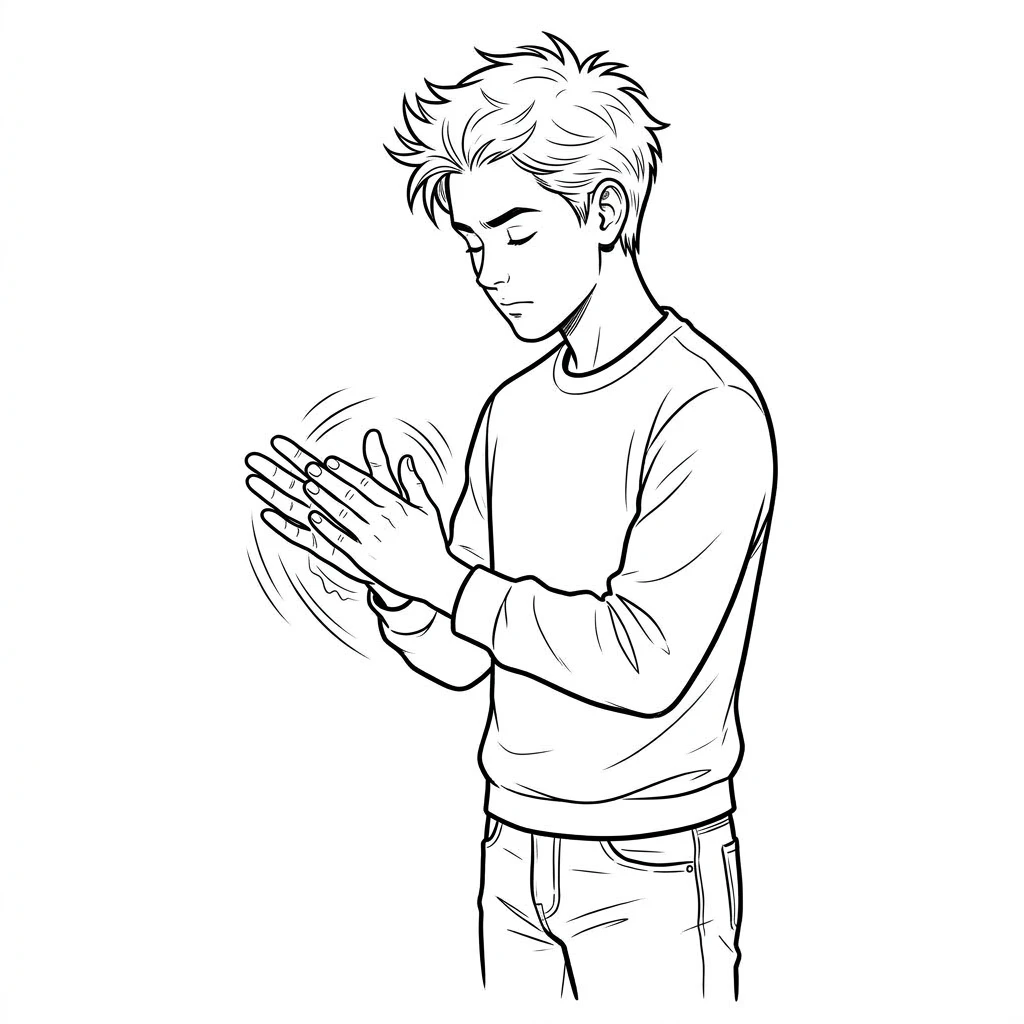
2. Rub your hands vigorously: Rub your palms firmly together. The tactile sensation of friction and warmth sends real sensory signals to your brain, instantly stabilizing the dream rendering.
3. Spin like a top (Spinning): If your visual field turns dark or the scene dissolves, spin in a quick pirouette around your axis. As you stop, the landscape snaps back into sharp focus.
4. Issue a clear verbal command: Call out loudly and clearly inside the dream: "Clarity now!" or "Stability 100%!" Your subconscious responds remarkably fast to decisive spoken intent.
💡 Pro Tip: If you do lose control and everything goes dark, remain completely still and expect a new dream to materialize immediately. You will often transition into a fresh, lucid scene within seconds!
💬 MY JOURNEY & PRACTICAL LESSONS
My Experiences, Pitfalls & Q&A
As a beginner, you often run into practical questions and hurdles. Here are my personal lessons from the first weeks, common obstacles, and proven solutions.
Pitfall #1: Information Overload & Performance Pressure
The problem: In your first week, you watch dozens of videos, read every theory, and start apps/projects. Your mind becomes overstimulated, creating performance pressure during sleep.
The solution: Take an information detox. Lucid dreaming requires calm, observation, and letting go. Stick to ONE technique (like MILD + WBTB) for at least 2 weeks without distractions.
Waking Up at Night: Problem or Opportunity?
The problem: As your dream recall improves, you wake up after every dream. Turning on bright lights or screens to type full stories disrupts your sleep cycle.
The solution: Treat it as a 'natural WBTB'! Don't turn on bright lights, quickly jot down 3 keywords in dim light, stay comfortable, and apply MILD intent as you fall back asleep.
Reality Checks: Quality Over Quantity
The problem: Checking your hand 20 times a day on autopilot fails because in a dream you'll do it just as mindlessly.
The solution: Aim for 4 to 6 deeply mindful checks daily. Pause for 30 seconds, pinch your nose or count fingers, and anchor checks to daily triggers (like opening doors).
Insight #1: Waking Up Too Quickly from Excitement
The problem: The moment you realize "I'm dreaming!", adrenaline spikes from excitement and you immediately wake up in your real bed.
The solution:Stabilize the dream right away. Don't rush to fly. Gently rub your hands together, touch the floor or wall, or spin around to anchor your senses in the dream.
Insight #2: The 'Back-to-Sleep' Mindset
The problem: Worrying that writing down dreams ruins your sleep quality or keeps you lying awake overthinking.
The solution: Tell yourself: "The dream is safely saved in keywords, I can relax completely now." Focus on your breathing and trust your body's natural sleep drive.
Audio & Meditation: Binaural Beats & Hemi-Sync
The problem: Confusion about using audio (binaural beats, Hemi-Sync, guided meditations). Uncomfortable earbuds or loud volume disrupt sleep, or you're unsure when to use them.
The solution:Comfort & proper timing. Use audio preferably during a WBTB session or bedtime relaxation. Use a soft headband with flat sleep speakers, keep the volume low (15-20%), and use Hemi-Sync Focus 10 tracks to reach the "Body Asleep, Mind Awake" state.
Media & Inspiration
Explore my favorite books, videos, apps, and inspiring film classics that enrich your dream journey:
RECOMMENDED LITERATURE
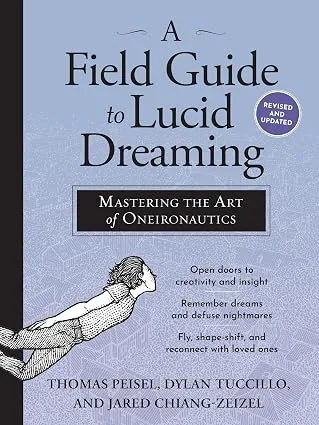
A Field Guide to Lucid Dreaming
Want to dive deeper into the science and practice of conscious dreaming? This inspiring and practical book by Dylan Tuccillo, Jared Zeizel & Thomas Peisel guides you step-by-step to gain control over your dream world.
The ultimate bible on lucid dreaming by Dr. Stephen LaBerge, the pioneer of scientific research into lucid dreaming at Stanford University. Packed with practical exercises and proven techniques.
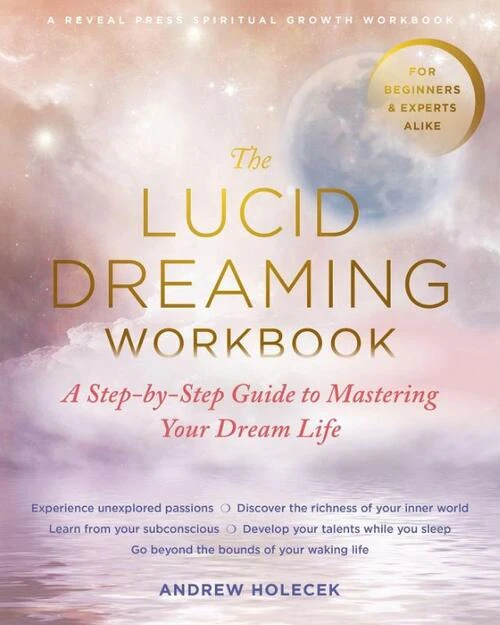
A comprehensive, step-by-step workbook by renowned dream expert Andrew Holecek. This book bridges modern sleep science with ancient Tibetan dream yoga, offering structured exercises and practical guidance to master your dream life.
In this gripping novel by Dan Brown, everything revolves around the power of the human mind and exploring our consciousness. The phenomenon of lucid dreaming plays a central and inspiring role in the story.
An outstanding channel dedicated to guided meditations, the Hemi-Sync Gateway Experience, Focus states (Focus 10, Focus 21), and deep techniques for lucid dreaming, awareness, and out-of-body experiences (OBEs).
A clear and scientifically grounded explanation of how lucid dreaming works in the brain, the role of REM sleep, and how to activate consciousness during sleep.
An inspiring video where a creator tests lucid dreaming techniques (like MILD and WBTB) intensely for 30 days, including valuable insights from expert Robert Waggoner.
Lucid Scribe is a comprehensive lucid dreaming and sleep tracking toolkit created by lucidcode. The app combines an intelligent dream journal with guided induction techniques like MILD (Mnemonic Induction of Lucid Dreams), targeted audio/visual cues, and REM sleep detection. A valuable ally to become conscious and take control while dreaming.
A visual masterpiece by Christopher Nolan focusing on dream architecture, multiple dream levels, and reality checks (such as the iconic spinning top). Inception dramatically illustrates the concepts of lucid dreaming and manipulating the dream world.
Director Cameron Crowe crafts an intriguing psychological thriller where the boundary between dreams, memory, and lucid reality blurs completely. A fascinating movie exploring perception and conscious control.
A dreamy masterpiece by Richard Linklater, created using unique rotoscope animation. The film follows a young man trapped in a seemingly endless lucid dream, engaging in deep philosophical conversations about consciousness, free will, and dream reality.
The ultimate sci-fi classic by the Wachowskis. While focused on a simulated reality, the central question "how do you know you're not dreaming?" and the choice of the red pill serve as the ultimate metaphor for waking up in your own lucid dream.
An inspiring and in-depth documentary where scientists, psychologists, and experienced lucid dreamers explore how lucid dreaming can be harnessed for personal growth, creativity, and overcoming fears.
A visually stunning and surreal thriller where a child psychologist uses advanced technology to enter the inner dreamscape and subconscious mind of another. A dark, artistic take on navigating dream worlds.
Share your story
I am also still exploring my way through the dream world. Whether you are just starting your very first dream journal, or are an experienced dream sailor flying through night-time adventures: I am truly curious about your story!
What challenges did you face? Which technique worked like a charm for you? Or what was your most remarkable dream experience? Let me know:
Both Dan Brown's story about the power of human consciousness and the mind-bending concept behind Inception — where you vividly realize you are dreaming, explore dream layers, and take control yourself — grabbed hold of me and never let go. It inspired this website: an exploration into the endless possibilities of our own dream consciousness.
🍪 Privacy & Cookies: Lucid Dreaming uses anonymous Google Analytics cookies to improve your website experience.